
Executive Summary: Core Sanitation Principles
Arrive clean, leave clean
Phytophthora ramorum sanitation starts with a simple field habit: arrive clean and leave clean. That sounds almost too plain for Sudden Oak Death work, but in practice it is the rule that keeps crews, volunteers, and landowners from moving contaminated mud from one drainage to the next.
Brendan O’Malley’s field notes tend to come back to the same point. The pathogen does not need a dramatic event to travel. A thin packed line of soil inside a boot tread can be enough to carry viable material away from a monitored site.
Untreated mud can support spore survival for on the order of 14 to 19 days. That window is long enough for a weekend hike, a volunteer survey, or a pruning job to become part of the transport route if sanitation is skipped.
Key Takeaway: Treat mud and soil as the main transport risk. Chemical disinfectants help, but only after visible debris has been scraped away.
The disinfectant principle
For routine field use, the practical target is a 70% alcohol range, with about 70% ethanol used in field sanitation work where fast drying matters. A 10% household bleach dilution can also be used for heavier boot and tire cleaning, based on an initial sodium hypochlorite concentration around 10% diluted to about 1% active solution.
Our experience showed that disinfectant choice matters less than sequence. Scrape first. Brush second. Spray only when the surface is exposed enough for liquid contact.
Understanding How the Pathogen Travels
The common question from the trailhead
People often ask whether a single dirty boot really matters. The short answer is yes, especially when that boot has crossed wet soil, bay leaf litter, or muddy drainage edges in a known Sudden Oak Death area.
P. ramorum thrives in moist environments. Optimal sporulation requires roughly 36 to 48 hours of continuous moisture, which is common under dense canopy after rain or fog drip. Infected leaf litter and organic debris can sit unnoticed in the tread, then break loose later in a parking area, nursery access road, or uninfected woodland.
Where contamination hides
Researchers once paid most attention to deep boot treads. That made sense at first glance. Deeper tread holds more mud.
Field tracking gave a more useful detail: micro-crevices in vulcanized rubber can harbor contamination even when the tread does not look especially deep. A tread depth threshold of about 5 mm marked a higher-risk point for accumulation, but tread depth alone did not tell the whole story.
Vehicle tires, hiking boots, animal paws, and hand tools all share one feature. They collect wet organic material in small protected spaces.
Warning: Do not judge risk by how clean something looks from a few feet away. Turn the boot over, check the side lugs, and look for damp soil pressed into corners.
Essential Sanitation Gear and Approved Disinfectants
Build the kit before the site visit
A good sanitation kit is not complicated. It should be tough enough for mud, small enough to live in the vehicle, and easy enough that tired volunteers still use it at the end of a survey day.
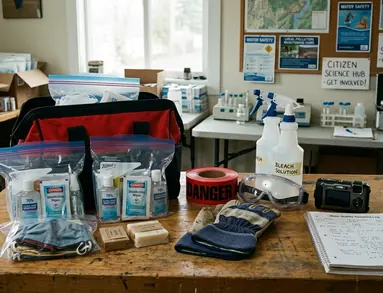
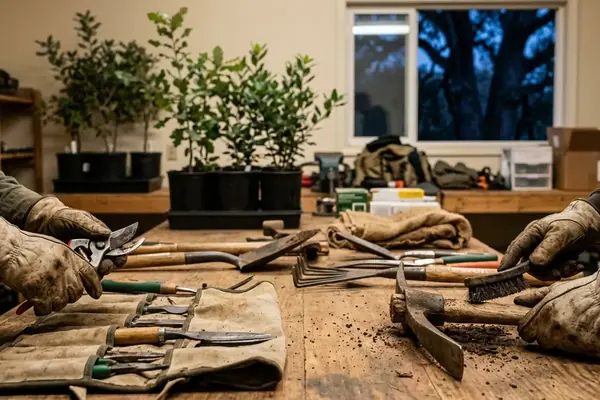
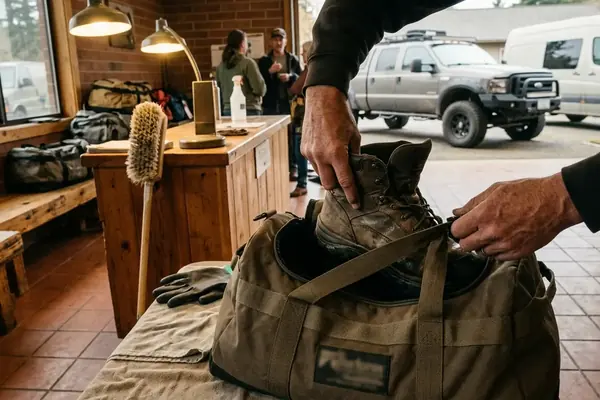
- Stiff palmyra fiber brush, non-metal
- Steel hoof pick or heavy-duty wire crevice tool
- About 70% ethanol solution in a high-output spray bottle
- Citrus-based degreaser for chainsaw bars and mechanical shears
- Dedicated sealed container for clean tools
Why brush type matters
During practice, brush selection turned out to be less trivial than expected. Soft nylon smeared mud across boot soles instead of lifting it. Brass wire removed material aggressively but damaged waterproofing on volunteer hiking boots.
The non-metal stiff brush became the better field compromise. It removes soil without turning routine sanitation into equipment damage.
For disinfectants, use alcohol when fast drying is important, especially on hand tools and small surfaces. Use the bleach dilution when boots, tire edges, or heavy rubber surfaces need more aggressive cleaning. In both cases, aim for roughly 45 to 60 seconds of continuous wet contact time after the surface is visibly clean.
Pro Tip: Label spray bottles by contents and mixing date. Bleach solutions lose strength over time, and unlabeled bottles create avoidable field confusion.
Step-by-Step Field Sanitation Protocol
From beginner routine to reliable habit
For new volunteers, sanitation should feel like a closing checklist, not a chemistry lesson. The goal is to make the clean-down routine short, visible, and repeatable.
Early versions of the protocol required full boot submersion in chemical baths. Compliance was poor because people did not want soaked footwear before driving home. The redesigned scrape-and-spray workflow raised protocol compliance to about 90%, with a typical sanitation time of 3 to 5 minutes per person.
- Move to a stable cleaning area before leaving the site, away from flowing water and sensitive vegetation.
- Scrape all visible mud from boot treads using a wire pick, hoof pick, or crevice tool.
- Brush the sole, heel, side lugs, and toe edge until packed soil is removed.
- Spray boots thoroughly with disinfectant, reaching all crevices and tread edges.
- Keep the surface wet for roughly 45 to 60 seconds when conditions allow.
- Bag or contain dislodged mud and debris if the site protocol requires removal from the area.
- Before traveling to uninfected areas, wash vehicle tires and undercarriages at a commercial car wash.
The vehicle step people skip
Boots get attention because they are easy to see. Tires often carry more material over longer distances.
Community observation suggests that vehicle sanitation works best when it happens before the next clean site, not at the end of the week. Commercial car washes are useful because they reach tires, wheel wells, and undercarriage surfaces with more pressure than a hand sprayer in a parking turnout.
Decontaminating Forestry Tools and Equipment
Clean the residue before the disinfectant
Pruning shears, hand saws, chainsaws, and mechanical shears need sanitation between every tree when working in areas where P. ramorum may be present. That does not mean a quick mist over sawdust is enough.
The hard lesson from early containment work involved chainsaw bar oil. Standard quaternary ammonium agricultural disinfectants did not penetrate chainsaw bar oil well, which allowed cross-contamination between test plots. The practical answer was not simply “use more spray.” It was to remove the oily layer first.
A tool sequence that holds up in the field
- Brush or wipe off sawdust, bark fragments, and plant sap.
- Apply a citrus-based degreaser to chainsaw bars, mechanical shear joints, and other oily surfaces.
- Wipe the surface clean before applying alcohol or the approved disinfectant for that tool.
- Allow wet contact time rather than immediately storing the tool.
- Place cleaned tools in a dedicated, uncontaminated container.
Member feedback indicates that crews are more likely to follow this sequence when the clean container is physically separate from the dirty-tool bin. Color coding helps, but the real gain comes from keeping clean metal away from wet sawdust and used rags.
Degreasing is worth the pause. Field work recorded about a 95% reduction in viable spores after degreasing, with equipment downtime in the ballpark of 12 to 18 minutes between infected sites. That delay can feel inconvenient during a long workday, but it is smaller than the cost of carrying contamination into a healthy stand of coast live oak.
Scope and Limitations of Sanitation Practices
What sanitation can and cannot do
Sanitation significantly reduces risk. It cannot guarantee 100% eradication of spores from every surface under every field condition.
That distinction matters. Sudden Oak Death prevention depends on repeated small decisions: where a crew parks, whether boots are cleaned before departure, whether sawdust is removed before spraying, and whether a visit should be postponed after heavy rain.
Heavy autumn rain creates the hardest conditions. Evaluations in dense canopy areas showed that active precipitation reduced chemical efficacy by about 65%. Around 8 mm of rainfall per hour, alcohol sprays can dilute before they penetrate the mud layer. Ethanol evaporation rates also vary sharply between dry summer monitoring and humid, near-freezing alpine surveys, requiring adjustments to contact time.
The clay-heavy soil catch
There is a narrow but important catch here: chemical disinfectants are entirely neutralized when applied to boots or tires caked in more than about 5 mm of clay-heavy soil. Complete mechanical removal has to come first.
In wet weather, the strongest prevention choice may be avoidance. If a site is saturated, muddy, and known to be high risk, postpone nonessential visits until conditions improve. That is not overcaution. It is basic conservation discipline.
Sources and guidance
For current regulatory context and host information, consult the USDA APHIS Phytophthora ramorum guidelines. Field sanitation should be matched to local access rules, seasonal conditions, and the specific surfaces being cleaned.
Your Thoughts
No comments.
Leave a Comment