
Executive Summary: The Path to Woodland Recovery
During practice, I often see landowners rush to clear dead trees the moment Sudden Oak Death (SOD) sweeps through a property. The instinct to clean up is natural. Immediate and total clearance is rarely the best path forward.
A proven recovery requires a phased canopy reduction. Ripping out all symptomatic trees at once exposes the shaded forest floor to intense, direct sunlight. This sudden exposure causes severe microclimate shock and topsoil desiccation. Field observations suggest roughly a 10% increase in understory mortality when crews clear a site too fast. Instead, a measured approach works best. You must plan for a stabilization phase in the ballpark of four years before the woodland ecosystem can safely support new, vulnerable growth.
Key Takeaway: Post-SOD recovery is a multi-year commitment divided into four strict phases: Assessment of surviving ecology, Clearance of pathogen reservoirs, Replanting via succession, and Monitoring for deep-soil spore survival.
Assessing the Damage and Site Conditions
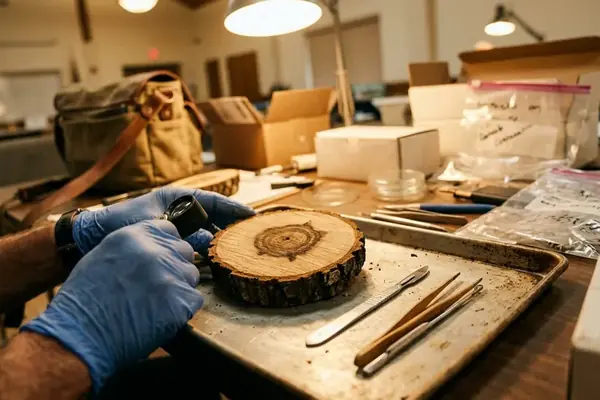
How do you know which trees to save and which to fell? Standard visual canopy assessments consistently miss early-stage trunk cankers. By the time leaves turn brown, the pathogen has already compromised the vascular system.
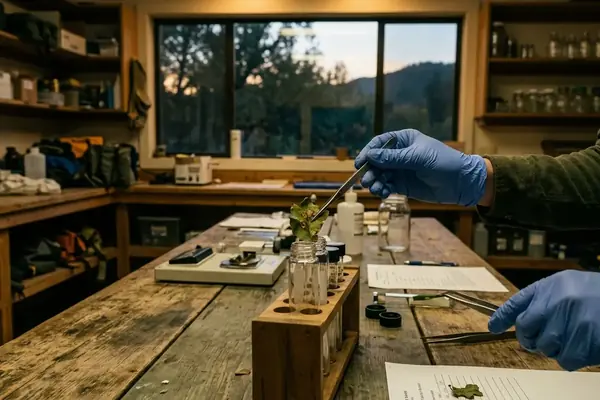
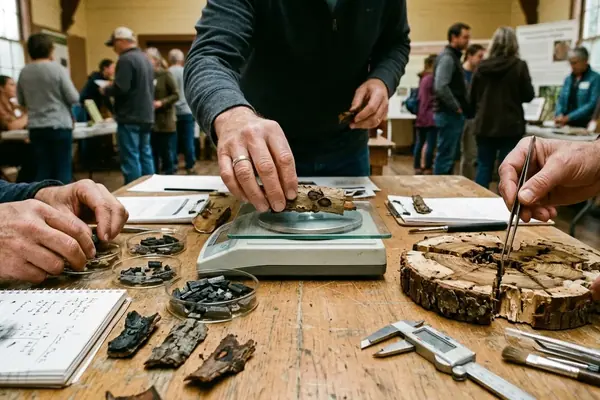
Community observation suggests that relying on visual cues alone leaves hidden reservoirs of Phytophthora ramorum in the stand. To get an accurate inventory, assessment teams now use bark moisture meters to detect unseen lesions. You must also evaluate the soil's capacity to shed water, as water molds thrive in saturated ground.
Conduct soil drainage percolation tests adapted from agricultural standards. You are looking for a percolation rate hovering around 1.3 to 2.7 centimeters per hour. Run these tests roughly 40-60 hours post-rainfall for the most accurate reading of optimal soil drainage. If your soil drains slower than this, the site remains highly conducive to future SOD outbreaks.
Clearing Infected Material Safely
Felling dead tanoaks and coast live oaks is dangerous work. Managing the infectious debris they leave behind is even harder.
Initial attempts to broadcast chipped infected material led to secondary spore dispersal during heavy rains. We thought spreading the chips would accelerate decomposition. It failed. The wind and rain simply carried the spores to healthy trees downstream. The protocol was revised to mandate localized deep-pile solarization.
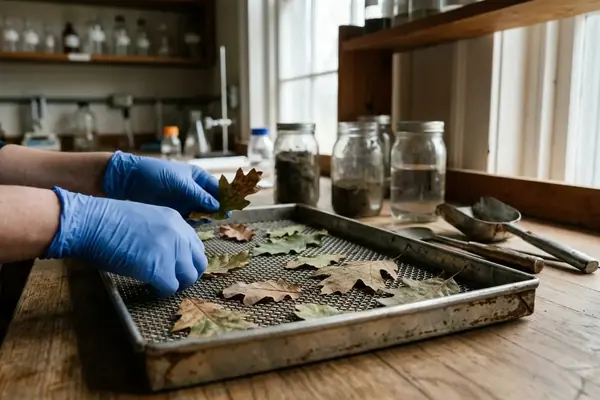
You must chip the infected wood, pile it deeply, and cover it with heavy-duty clear plastic. The goal is to bake the pathogen out of existence. This requires maintaining a core pile temperature of about 44°C, sustained for roughly 21-26 days. Follow the UC Integrated Pest Management (UC IPM) guidelines for handling and sealing this woody debris.
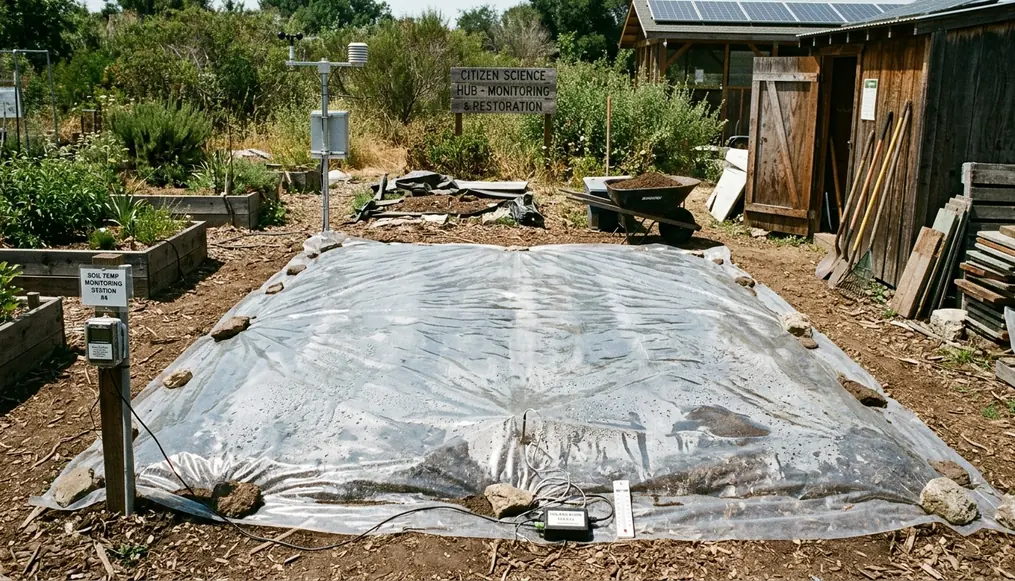
Site selection for these piles dictates your success. We see solarization pile efficacy varying drastically based on topography, with shaded ravine piles failing to reach the about 44°C threshold compared to south-facing slopes. Always build your solarization piles in direct sunlight.
Selecting and Planting Resistant Species
Many beginners want to immediately replant the exact oak species they lost. Directly placing susceptible oak saplings into recently cleared zones guarantees high sapling mortality. The pathogen load in the soil is simply too high.
Member feedback indicates that a succession model yields the highest survival rates. First, establish non-host conifers like Douglas-fir to rebuild the canopy and restore shade to the forest floor. Plant these conifers with about 6-meter spacing. You must then enforce a roughly 18-24 month delay before introducing any oak saplings into the understory.
One catch: relying heavily on non-host conifers to rebuild the canopy accelerates soil acidification, which can suppress the regeneration of native herbaceous plants that depend on the slightly alkaline leaf litter of mature oaks. You have to balance the need for canopy shade with the chemical realities of the soil.
Soil Management and Pathogen Mitigation
Managing the soil microbiome is your strongest defense against future outbreaks. Water runoff management is critical, but chemical interventions require extreme precision.
Warning: Avoid broad-spectrum fungicidal soil drenches. The failure of broad-spectrum fungicidal drenches due to the unintended eradication of symbiotic mycorrhizal networks required for oak sapling establishment is well documented. You cannot rebuild a forest by sterilizing its foundation.
Our experience showed that management must shift entirely to targeted phosphonate trunk injections for high-value surviving oaks. This acts as a preventative immune boost rather than a cure. Administer on the order of 14 ml of phosphonate per centimeter of trunk diameter. Timing is everything. Apply this treatment during a narrow 10-15 day window in late autumn when the tree is pulling nutrients down into its root system.
Scope and Limitations of Post-SOD Recovery
True ecological restoration is measured in decades—not years. Once established in a woodland, Phytophthora ramorum cannot be completely eradicated.
Longitudinal tracking revealed that spores survive deep underground during prolonged droughts. Spore viability is confirmed at about 40 cm depth. Because of this deep-soil persistence, the overarching goal of woodland management was officially downgraded from total eradication to long-term suppression. You are committing to a monitoring horizon trending toward 13 years at minimum.
While our ongoing protocols inform these, site-specific soil hydrology means these percolation and solarization baselines must be calibrated locally. No two woodlands drain exactly the same way.
Pro Tip: Post-SOD Site Stabilization & Phytosanitary Checklist
- Verify soil percolation rates exceed around 1.3 cm/hr before initiating replanting phases.
- Confirm solarization piles maintain a core temperature of about 44°C for a minimum of 21 days.
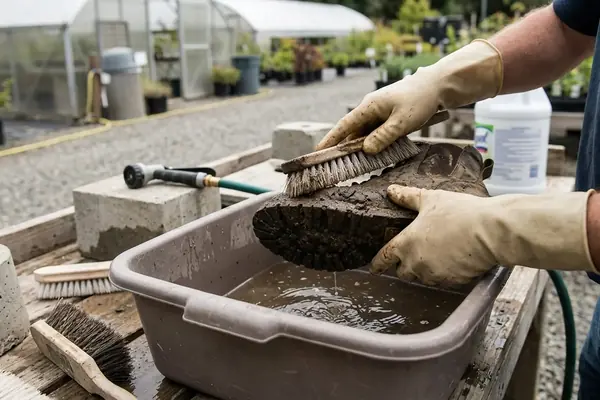
- Sanitize all chainsaw blades and heavy equipment before moving between woodland zones.
Your Thoughts
No comments.
Leave a Comment