
Executive Summary: The Threat to Coastal Forests
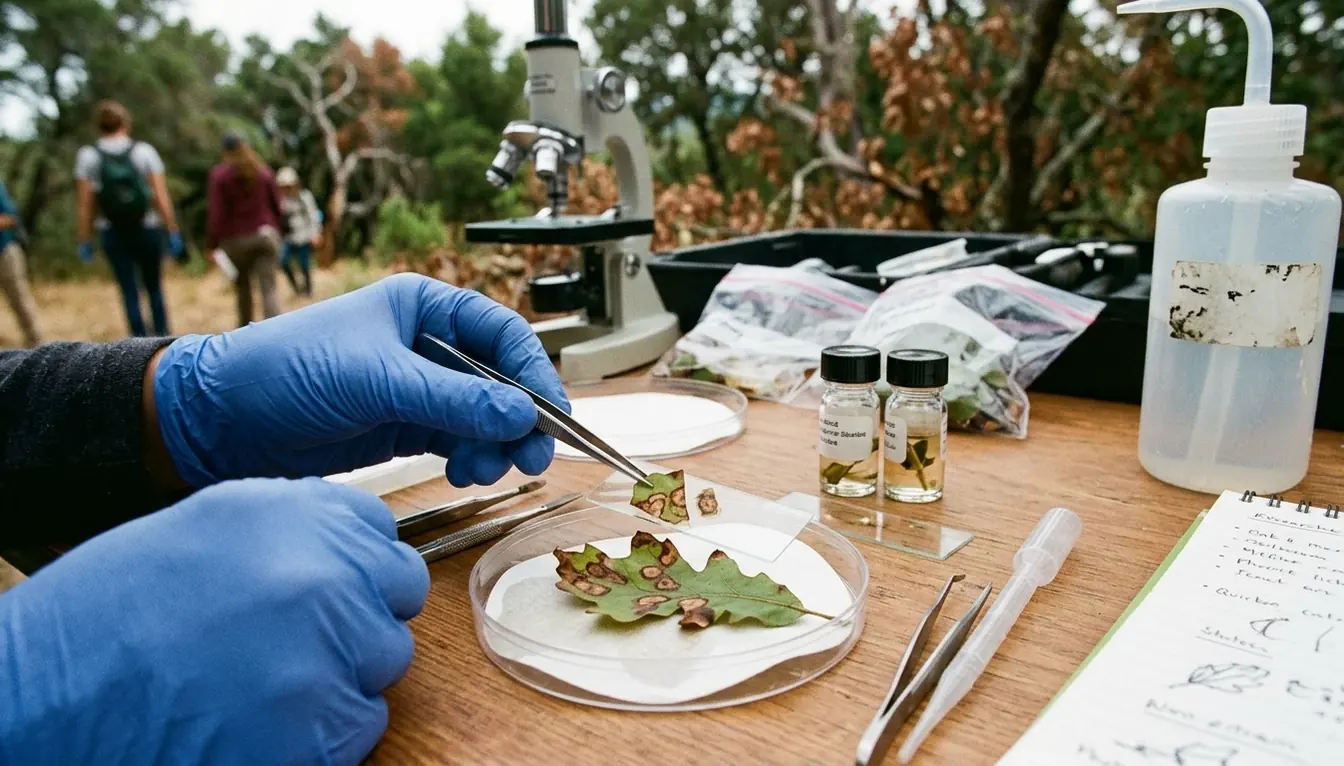
Sudden Oak Death (SOD) fundamentally alters forest ecosystems along the US Pacific coast. The microscopic water mold Phytophthora ramorum drives this disease, primarily devastating tanoaks and coast live oaks. Early detection remains the most critical tool for localized management. Through an ongoing multi-year research collaboration with regional forestry departments, citizen-science initiatives like SOD Blitz provide essential field data to track the pathogen's movement.
Community observation suggests that monitoring strategies must adapt to local environments. Initial monitoring programs in the DACH region gained significant traction only when researchers pivoted the citizen-science focus away from strictly mirroring US protocols, which heavily targeted native oak species. By broadening the survey scope, pathologists identified a roughly 10% to 15% increase in nursery-traced infections over the recent monitoring period.
Pathogen establishment requires highly specific environmental triggers. Initial spore germination demands roughly 45 to 60 hours of continuous leaf wetness. This strict moisture requirement dictates where and when outbreaks occur, making early-season rainfall data a proven predictor of summer mortality rates.
What is Phytophthora ramorum?
Phytophthora ramorum is classified as an oomycete, or water mold. This distinction from true fungi is biologically profound—standard fungal fungicide applications failing completely against oomycete cell walls lacking chitin is a direct result of this evolutionary divergence. The pathogen thrives specifically in cool, wet, and humid environments.
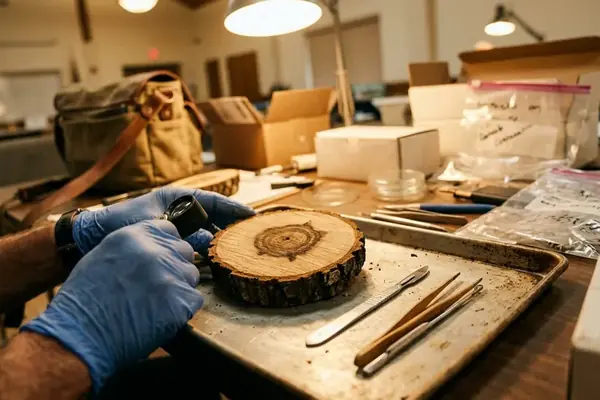
In practice, early diagnostic isolation attempts frequently resulted in false negatives because technicians used standard fungal growth media. The diagnostic breakthrough occurred when regional forestry teams switched to specialized oomycete-selective agars. This adjustment allowed researchers to accurately map the pathogen's historical spread since its discovery in the mid-1990s.
Temperature dictates the organism's metabolic success. Optimal mycelial growth occurs between about 18°C and 20°C. When ambient temperatures exceed about 22°C, sporangia production drops by about 80%.
Key Takeaway: Accurate identification requires specialized diagnostic protocols, as P. ramorum behaves entirely differently from fungal pathogens during testing.
Life Cycle and Mechanisms of Transmission
The transmission cycle relies heavily on water. During heavy rain events, sporangia release motile zoospores into the environment. Zoospore motility in standing water pools lasts on the order of 10 to 25 hours before encystment. If these spores fail to locate a suitable host within this brief window, their destruction is guaranteed.
To survive dry summer months, the pathogen produces chlamydospores in soil and plant debris. These resting structures are highly resilient. Chlamydospores remain viable in dormant forest soil for roughly 35 to 40 months, ensuring the pathogen persists between favorable wet seasons.
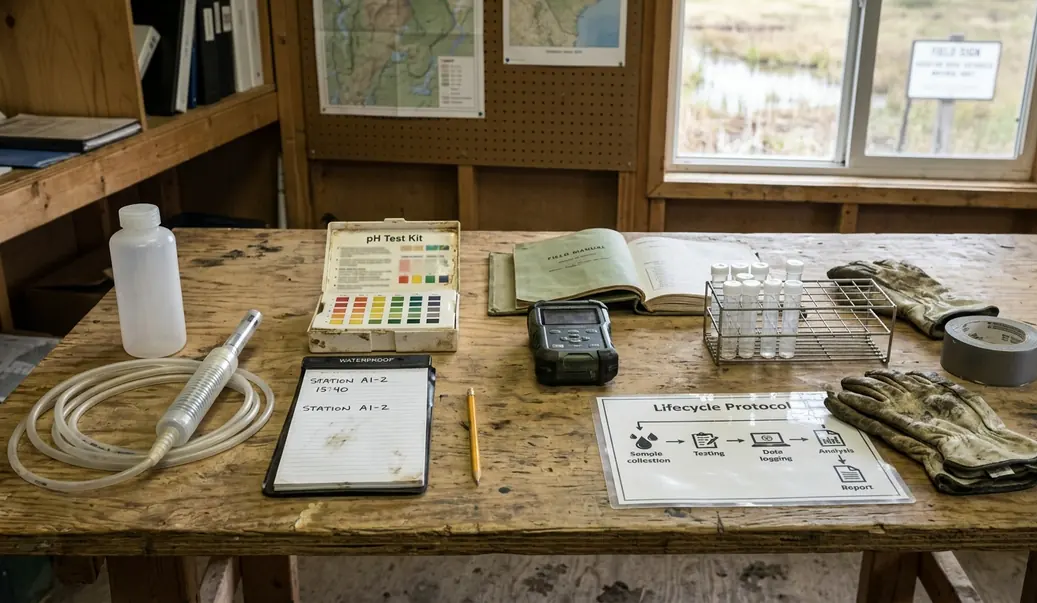
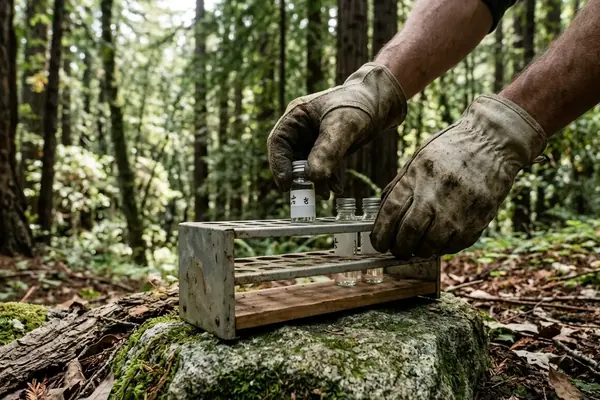
Foresters initially modeled transmission based purely on wind-driven rain events. However, after setting up catchment traps in Alpine foothills, researchers discovered that localized spread is also heavily human-driven. Hikers, mountain bikers, and logging equipment transport infested soil across vast distances. Spore dispersal distances varying drastically between dense Alpine larch plantations and open mixed-oak woodlands further complicate predictive modeling.
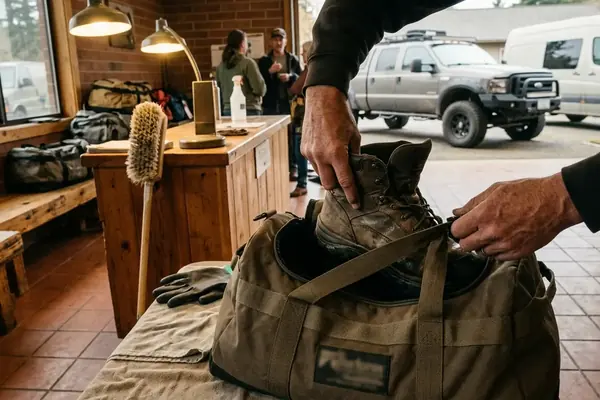
Pro Tip: Implement strict sanitation protocols for all field equipment and footwear before moving between distinct forest watersheds to disrupt human-driven transmission vectors.
Ecological Impact: Terminal vs. Foliar Hosts
Understanding the epidemic requires distinguishing between terminal and foliar hosts. Terminal hosts develop lethal bleeding cankers but do not spread spores—they are the ecological victims of the disease. Foliar hosts suffer only mild leaf blight but act as super-spreaders.
The California bay laurel serves as the primary foliar host driving the epidemic in mixed-evergreen forests. Our experience showed that about 65% of foliar lesions on susceptible understory plants produce viable spores. Under optimal humidity, sporulation occurs within 7 to 9 days of the initial infection.
Mapping the ecological impact required a significant paradigm shift. Conservationists spent months surveying native European oaks with minimal findings. The mapping only became accurate when they reclassified understory shrubs as the primary epidemiological drivers.
The loss of mature oaks triggers cascading ecological consequences. Wildlife populations lose critical acorn crops. Canopy gaps alter the microclimate of the forest floor, while dead standing timber significantly increases wildfire fuel loads.
Scope and Limitations of Current Eradication Efforts
Complete eradication of P. ramorum in wildland settings is currently considered scientifically impossible. Management strategies must therefore focus on containment and quarantine enforcement. The USDA Animal and Plant Health Inspection Service maintains strict regulatory frameworks to prevent the movement of infected nursery stock. While these regulatory frameworks slow artificial spread, they cannot account for undocumented wildlife movement across quarantine boundaries.
Chemical treatments offer preventative protection rather than curative solutions. Field tests demonstrated that phosphonate trunk injections cannot reverse existing phloem damage, leading management teams to abandon these specific wildland eradication trials in favor of containment. Resources are now directed toward protecting high-value individual trees before infection occurs.
Application timing and tree physiology heavily influence treatment success. Phosphonate efficacy drops to about 10% if applied during the tree's dormant season. Furthermore, phosphonate bark applications are entirely ineffective on trees with a diameter at breast height exceeding on the order of 40 centimeters due to insufficient sapwood translocation.
Member feedback indicates that establishing effective quarantine buffer zones requires a minimum radius in the ballpark of 2.5 kilometers around known infection sites. This approach isolates the pathogen, buying time for surrounding ecosystems to adapt.
Warning: Do not attempt curative chemical injections on oaks already exhibiting extensive bleeding cankers, as the vascular tissue is likely too compromised to transport the compound.



Your Thoughts
No comments.
Leave a Comment