
The Silent Threat in the Canopy
Standing on a Marin County property documented in program tracking data, the visual contrast tells a deceptive story. A 200-year-old coast live oak stands bleeding viscous burgundy sap from bark fissures typically 3 to 5 feet above the soil line. Just 15 feet away sits a lush, seemingly healthy California bay laurel. The bay laurel leaves secretly harbor the pathogen, and transmission occurs easily across this 15-foot canopy gap during winter storms.
Key Takeaway: Removing bay laurels within 10 meters of susceptible oaks is the single most impactful intervention a property owner can make.
This biological reality challenges the passive approach to property management. Where field assessments tracked management & prevention outcomes, the finding follows: treating oak trunks with phosphonate injections while leaving an overhanging infected bay laurel intact results in overwhelming spore loads that bypass the chemical defense. The oak remains highly vulnerable as long as the primary host remains in the canopy.
The Biological Reality of Phytophthora ramorum
Property owners often focus entirely on the dying oak. Shifting the educational framework to the asymptomatic bay laurel is necessary to understand disease ecology. Oaks are dead-end hosts that die from the infection but do not spread it. Bay laurels act as the primary foliar hosts driving the epidemic.
Sporangia production peaks during late winter and early spring rain events, specifically between February and April. The pathogen thrives in temperatures between 15°C and 20°C during prolonged wet periods. Treating the oak without managing the bay laurel is like bailing water from a boat without plugging the hole.
While these transmission dynamics reliably predict infection rates in mixed evergreen forests, this aggressive cycle is strictly limited to the coastal fog belt and specifically targets coast live oaks, California black oaks, and canyon live oaks; white oak species remain unaffected. Joint research dating to the initiative's early years with the UC Berkeley Forest Pathology and Mycology Lab confirms this specific host-pathogen relationship.
Why We Hesitate to Cut Down Trees
Homeowners naturally resist cutting down mature, native trees. Bay laurels provide excellent privacy screening and year-round greenery. The hesitation is understandable.
Early interventions attempted aggressive crown reduction of bay laurels to maintain privacy screening while reducing the overall spore load. We abandoned this approach after observing the biological response. Epicormic sprouts emerging from heavily pruned bay laurels grow 2 to 4 feet per season. This rapid, dense regrowth increases leaf density, trapping moisture and creating ideal microclimates for Phytophthora ramorum proliferation.
Keeping a high-risk bay laurel almost guarantees the agonizing, slow death of the keystone oak tree—an outcome that forces a difficult choice. Woodland conservation requires ecological triage in an ecosystem altered by an invasive pathogen.
The 10-Meter Rule in Practice
Forest pathology researchers recommend establishing a scientifically backed clearance zone of 10 meters (approximately 33 feet) around the oak trunk.
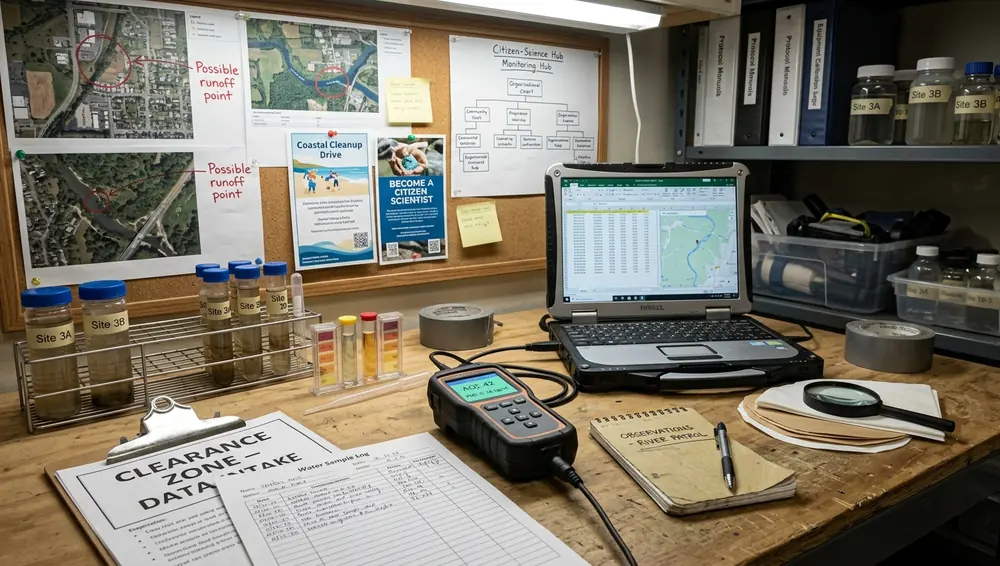
Property lines or existing structures often prevent a full clearance zone. A triage protocol helps prioritize removals when a perfect radius is impossible. Focus on bay laurels situated directly upwind or uphill of the oak canopy. Prioritizing uphill bay removals on sloped terrain is critical, as surface water runoff carries zoospores significantly further than standard wind dispersal.
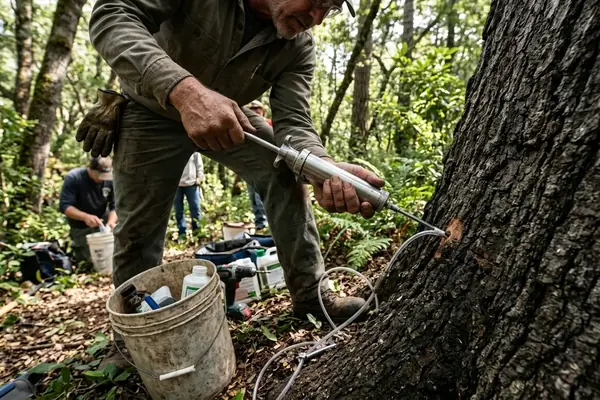
Pro Tip: Applying targeted herbicide to the freshly exposed cambium ring within roughly 5 to 10 minutes of the felling cut prevents basal resprouting.
Without immediate stump management, the bay laurel will resprout. These low-growing sprouts quickly reintroduce the hazard to the immediate environment.
Reframing the Forest
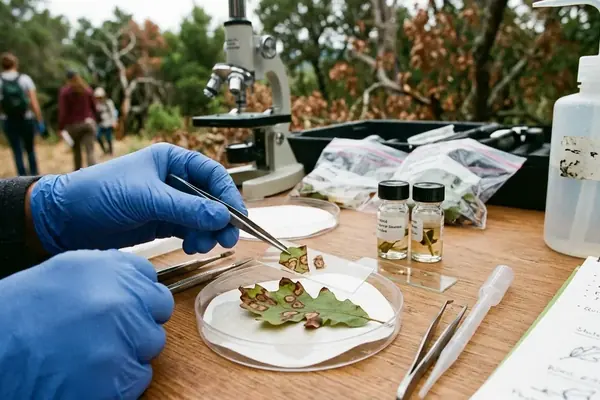
Community outreach messaging must transition from passive observation to active pathogen disruption. Focusing on the microscopic scale of the threat justifies these forest-level interventions. The visual health of a bay laurel masks its role as a prolific spore generator.
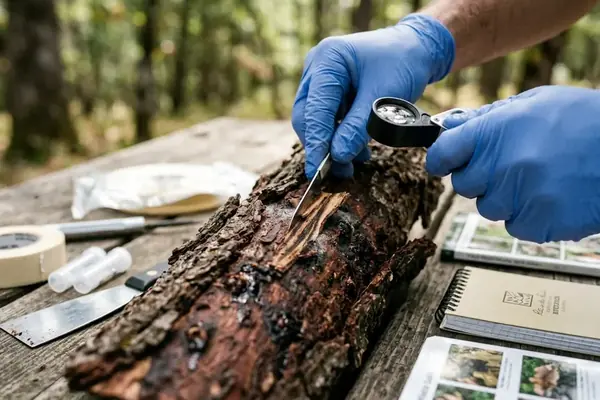
A single infected California bay laurel leaf generates around 5,000 to 10,000 infectious sporangia during a warm rain event lasting close to 48 hours. These structures release microscopic zoospores that swim directly through water films on bark to initiate new trunk infections.

Your Thoughts
No comments.
Leave a Comment